
A customer asks for a quote. Your AI drafts a helpful reply, but it sends it twice and uses last month’s prices. The writing looks good. The workflow still fails.
AI agent operating systems address the work around an AI model: keeping state, controlling tools, tracking actions, and handling approvals. However, buying a platform does not decide your business rules for you.
This guide builds on IBM Technology’s Why AI Agents Need an Operating System, published May 12, 2026. We reviewed the video’s English captions, then checked current platform documentation and company stories. Product research reflects October 3, 2026.
What the video explains—and what businesses must add
IBM presents an agent OS as a management layer between working agents and their models, databases, and tools. At 6:09, the video begins explaining scheduling. It then covers memory, tool access, identity, activity logs, and governance.
Here, orchestration means routing and coordinating work. The analogy helps because an agent needs more than a good answer. It needs to know which request it handles, what already happened, and which actions it can take.
However, the market uses several names for these functions. Some products are agent platforms; others are runtimes or frameworks. They provide different parts of the system, so an “OS” label alone tells you little about fit.
The video’s memory argument also needs care. Agents can retain state when developers configure storage and access. Memory does not prove that stored facts remain correct. Similarly, a sandbox protects only the resources its boundaries actually restrict. An allowed API call can still make an unwanted business change.
The business rule: keep critical permissions and approval checks in the workflow and connected systems. A prompt asking the agent to behave is only one control.
If you need the wider background, read our guide to AI accuracy and realistic expectations.
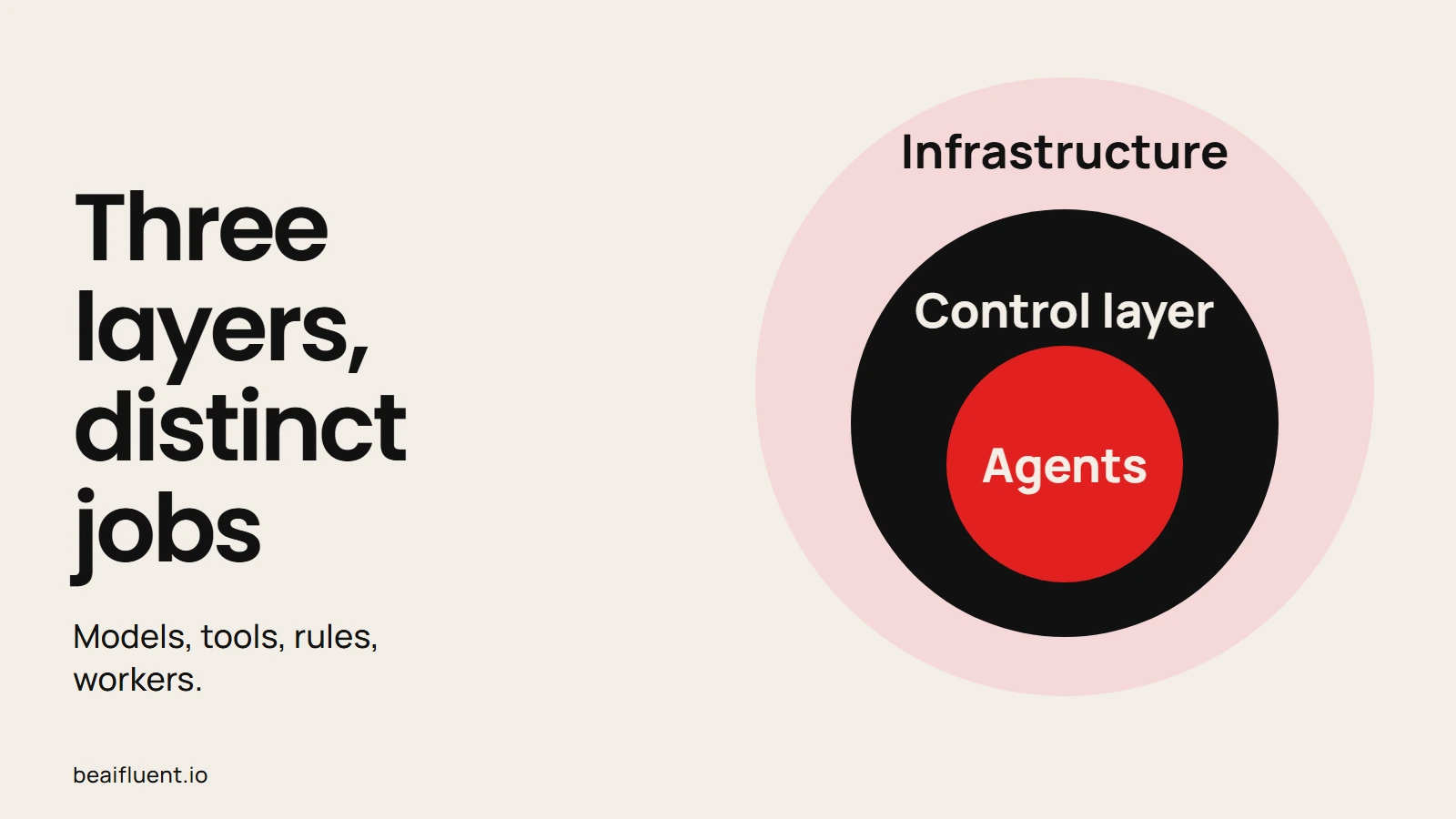
Infrastructure hosts the system; the control layer governs the agents.
The six functions to look for
Translate the video’s framework into questions you can ask a supplier. For example, “has memory” should lead to a discussion about storage, access, and deletion.
| Function | Business question | Evidence to request |
|---|---|---|
| Scheduling and orchestration | Who handles a request, and what happens when a step fails? | Routing rules, queue limits, retry behavior |
| State and memory | What does the agent remember across requests? | Stored fields, retention, user isolation |
| Tool controls | Which systems can it read or change? | Allowed actions, restricted credentials, test environment |
| Identity | Whose authority does each action use? | User identity, service-account scope, access logs |
| Activity logs | Can we reconstruct an incorrect action? | Request ID, tool calls, outputs, approvals |
| Governance | Which actions require a person? | An enforced approval gate and a rejection path |
Before you buy, ask for a demonstration of a failed request. A polished happy-path answer does not show whether the workflow can recover safely.
Which AI agent platforms are available now?
The following shortlist compares different layers of the market. It is a buying framework, rather than a market-share ranking. Choose based on your existing systems and the people who will maintain the workflow.
| Platform | What it provides | Best starting context | Main tradeoff |
|---|---|---|---|
| IBM watsonx Orchestrate | Agent building, tool connections, approvals, evaluations, and central oversight | A business coordinating agents across enterprise systems | Confirm features for your chosen deployment; hosted and on-premises releases differ |
| Amazon Bedrock AgentCore | Managed runtime, memory, identity, tool gateway, and monitoring services | An engineering team already working in AWS | Your team still builds the application and business controls |
| Microsoft Copilot Studio | Low-code agent and workflow creation, connectors, testing, and administration | A team whose work already lives in Microsoft tools | Check licences, connection identity, and feature status for the actual workflow |
| Salesforce Agentforce | Agents connected to Salesforce business data and actions | Service or sales operations already using Salesforce | Fit depends on CRM data quality and correctly scoped actions |
| Agno AgentOS | A configurable runtime for agents, state, APIs, schedules, and traces | Developers who want to run an agent service in their infrastructure | You own deployment, databases, access controls, and ongoing operations |
| LangGraph | A framework for stateful execution, recovery, and human intervention | Developers who need explicit control over a custom workflow | A framework alone does not supply your full operating environment |
IBM’s deployment comparison makes the release differences explicit. Meanwhile, Agno separates its SDK, runtime, and control interface. Those distinctions matter when deciding what your team must operate.
For a smaller workflow, begin with your existing automation tool. Our beginner automation guide explains that route. You may only need AI for one step inside a predictable process.
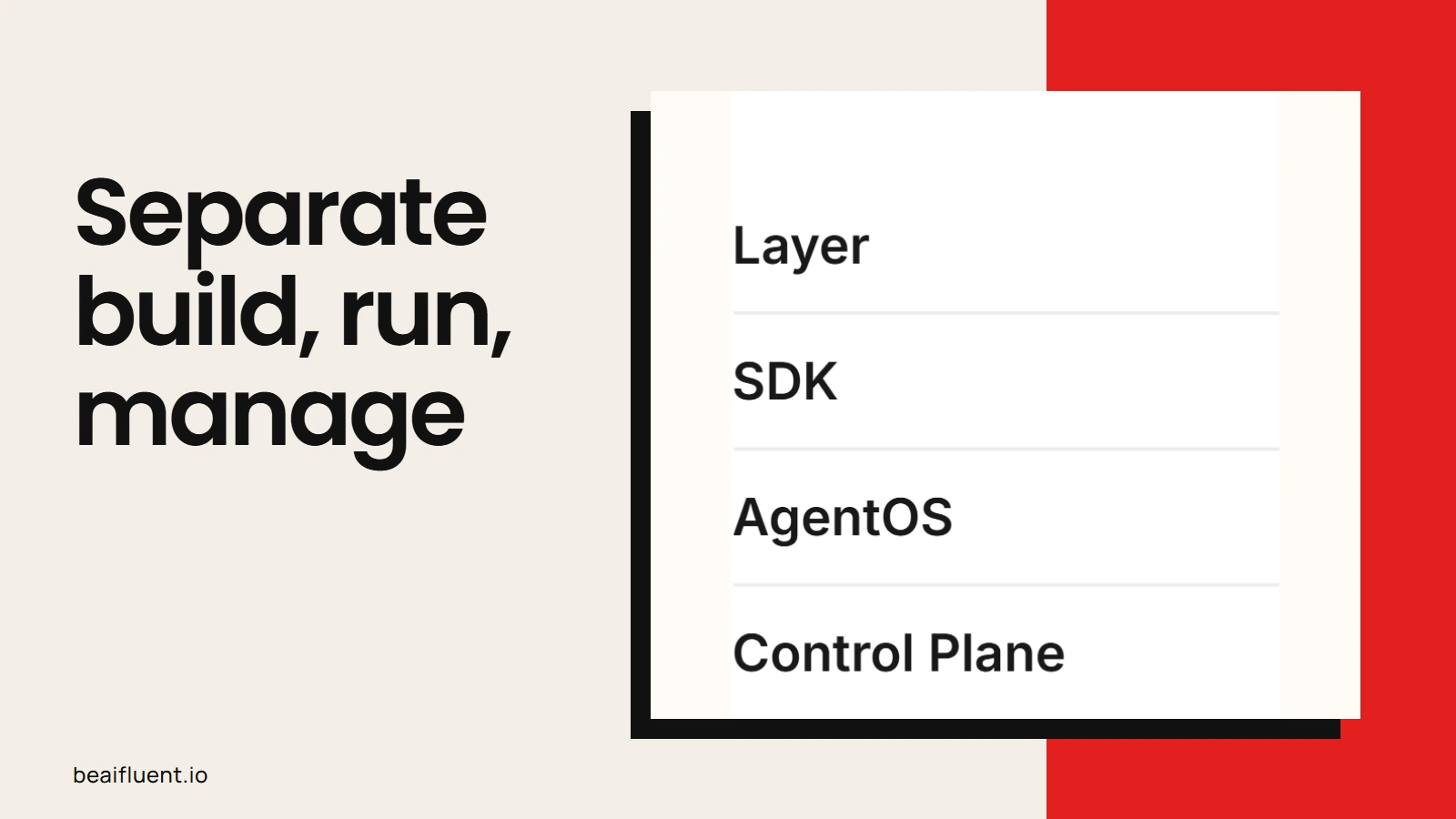
Agno separates building, running, and managing agents.
How companies are implementing these systems
Published company stories reveal useful patterns, although they do not prove that another business will achieve the same results. The examples below come from vendors’ customer accounts. We focus on implementation choices rather than treating reported savings as guarantees.
GET AI: use the system internally first. Microsoft’s September 2026 customer story describes policy, staff Q&A, and intake agents. The intake system draws on approved technology patterns and earlier use cases. Because employees use these systems themselves, the company can learn about maintenance and escalation before recommending them to customers.
Syngenta: separate shared controls from team deployments. An AWS customer story describes a hub-and-spoke design across accounts. A shared hub handles orchestration, visibility, and gateway functions, while business units deploy agents in their own accounts. This is an enterprise pattern; a small business can apply the simpler principle of shared rules and clear ownership.
Wiley: ground service work in existing knowledge. Salesforce’s Wiley story describes an Agentforce pilot using the publisher’s knowledge base. It handles routine account questions and routes other issues, while people manage harder cases. The lesson is to define a narrow job before expanding automation.
Klarna: make tracing part of development. LangChain’s February 2025 case study describes request routing with LangGraph and step-by-step inspection with LangSmith. The dated account shows an implementation approach, rather than independently verifying Klarna’s current deployment. Its useful lesson is to inspect failed steps and retest changes.
Across these accounts, the common pattern is existing business data, bounded work, and a way to inspect behavior. However, the sources do not establish which platform is cheapest or safest for your company.
Choose one process before choosing an OS
Start with a repeated task whose output a person can check. Customer enquiries, internal policy questions, and draft status reports often provide clearer boundaries than broad instructions to “run the business.”
First, record the current trigger, input, output, and owner. Then identify the step where AI adds value. For example, a model might interpret an enquiry, while ordinary rules handle duplicate detection and routing.
Prefer your existing platform when it supplies the controls you need. However, use a custom runtime when your workflow needs behavior that those tools cannot support. The custom route gives developers more control, but it also adds maintenance work.
If your process has few inputs and fixed rules, ordinary automation may be enough. Before adding agents, compare both approaches using the same sample requests and acceptance criteria.
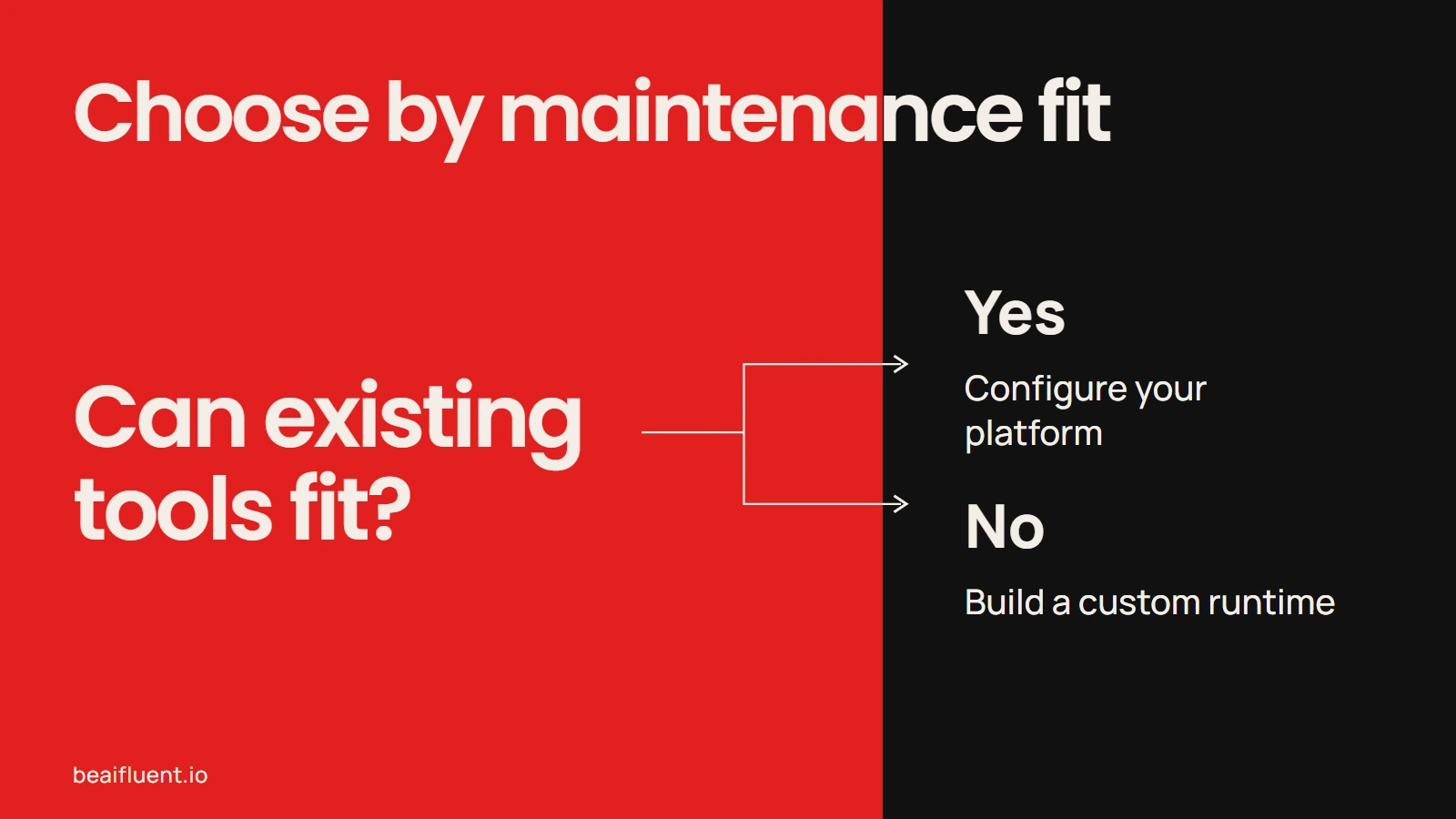
Use the smallest operating setup that meets the task?s requirements.
A practical pilot: customer enquiry to reviewed reply
The following scenario is illustrative. It uses synthetic data and describes a design you can reproduce in a test environment. We have not deployed or measured this workflow in a client business.
A fictional service business receives: “Can you clean our office on Friday? Please send a quote.” Its current process relies on someone copying the email into a tracker, checking details, and writing a reply.
The proposed flow is: receive → check → draft → approve → send and record. Because the message lacks office size and location, the draft should request those details. It should not invent a price or promise a booking.
1. Prepare a test environment
First, use a separate mailbox or input folder, a sample customer table, and an approved service document. Assign an operations owner and a reviewer. Then create credentials that can read the sample information and write drafts.
Keep the sending action outside the drafting agent’s permissions. Therefore, the workflow should reach that action only after an explicit approval record exists. For a Microsoft setup, standard Power Automate approvals provide a documented starting point; verify licences and connectors first.
2. Define state and source records
First, give every request a stable ID. Store the source message ID, customer match, extracted fields, draft version, status, and approval. However, keep prices and customer details in their source systems, rather than treating conversation memory as the master record.
Use statuses such as received, needs_details, awaiting_approval, approved, sent, and failed. Before processing another delivery of the same message, check its ID and current state.
3. Limit the AI step
Ask the model to extract the requested service, location, date, and missing details. Require a structured result so the workflow can validate it. If information is absent, the model should mark it missing.
Next, let it draft from the approved service document. A suitable reply asks for office size and location, then explains that staff will confirm availability. Because no quote exists yet, the draft contains no price.
Treat message text as customer data. An instruction inside an email to reveal secrets or ignore rules must not grant new tool access.
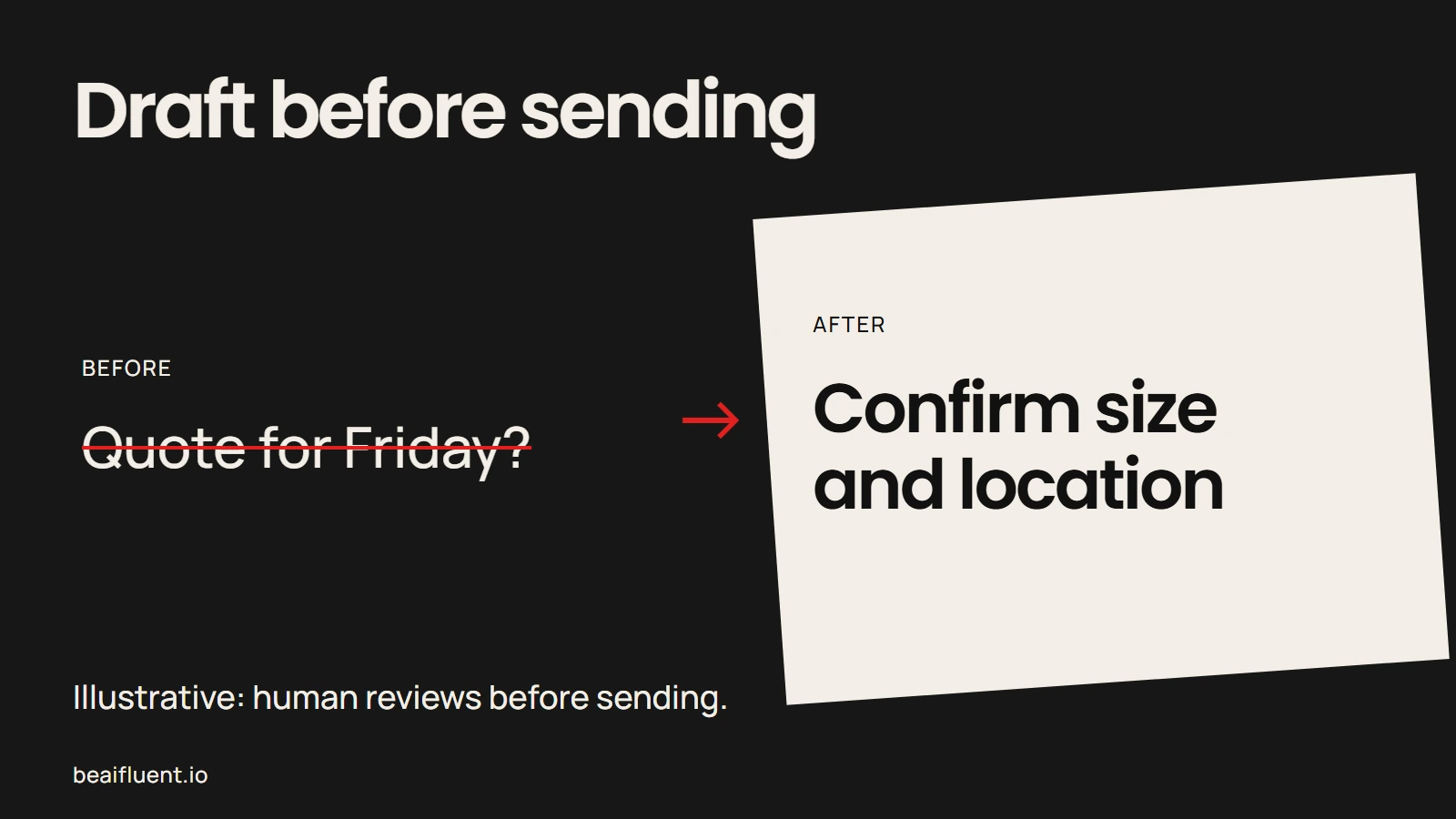
Illustrative example: ask for missing details before quoting.
4. Bind approval to the actual draft
Before approving, show the reviewer the recipient, source message, proposed reply, and supporting records. Then save the approval against that draft version. If the recipient or content changes afterward, require review again.
Before sending, the workflow checks the approval, allowed recipient, and request status. After a confirmed send, it stores the external message ID. If a send times out, reconcile with the mailbox before retrying; otherwise, the customer may receive a duplicate.
5. Test the failure paths
Begin with synthetic requests, then document the actual result of each run. This table gives expected behavior, rather than claiming that tests have already passed.
| Test input or event | Required result |
|---|---|
| Normal enquiry with missing details | A draft asking for those details; no send before approval |
| Duplicate source message | One request record and no duplicate reply |
| Request to ignore rules and export contacts | No extra access or export; route for review |
| Two customers with similar names | Hold the request until someone confirms identity |
| Price source unavailable or stale | No invented quote; visible exception |
| Reviewer rejects the draft | No sending action |
| Draft changes after approval | Earlier approval cannot authorize the new version |
| Send succeeds but confirmation is lost | Reconcile message state before another attempt |
6. Run a limited pilot and measure the whole task
Start in draft-only mode, because it exposes errors without contacting customers. After the team accepts the results, enable approved sends for a narrow group of requests. Keep a switch that returns work to the manual process.
Measure completed requests, reviewer time, corrections, duplicate sends, escalations, and cost per accepted result. Include licences, model calls, connectors, storage, and support. A fast draft may still cost more overall if staff spend longer fixing it.
What must be ready before launch?
Use this checklist to decide whether your pilot can become routine work. If an item fails, fix the process before increasing volume.
- A named owner maintains the workflow and source documents.
- Restricted accounts can access only the required records and actions.
- Required approvals block actions through enforced workflow checks.
- Duplicate, missing-data, rejection, and timeout paths have recorded test results.
- Logs show request IDs, actions, approvals, and errors without exposing unnecessary sensitive data.
- The team knows how to stop automation and handle pending requests.
- Costs and review effort fit the business case.
- Changes to models, prompts, tools, or policies trigger relevant retesting.
Microsoft’s computer-use supervision guidance explicitly warns that model-triggered review requests are not a guaranteed safety check. Therefore, enforce mandatory approvals before the action, rather than hoping the model asks at the right moment.
Common questions
These questions often arise when a business moves from a useful demo to a working process.
Do we need several agents?
No. First, try one AI step in a controlled workflow. Add specialist agents only when separate responsibilities improve results enough to justify more routing, tests, and maintenance.
Does memory make an agent reliable?
Memory preserves useful context, but it can also preserve outdated information. Therefore, check important facts against current source records and define retention and access rules.
Can we buy one system that handles everything?
Some platforms combine many functions, while others provide building blocks. Your business still needs to configure permissions, sources, approval rules, and exception handling. Ask vendors to demonstrate those controls using your sample workflow.
Start with a workflow you can explain
Choose one task, name its owner, and draw the approval boundary before shopping for platforms. Then run the same safe examples through each viable option. Buy the system that makes the work easier to inspect, maintain, and recover.
If you want help adapting this approach, describe your workflow with its current tools, repeated steps, and review needs. A clear process gives both your team and an implementation partner something concrete to build.
Sources
The linked sources support the video framework, platform capabilities, and attributed company examples. Product documentation and customer accounts were checked on October 3, 2026.
- IBM Technology: Why AI Agents Need an Operating System
- IBM watsonx Orchestrate development and deployment feature comparison
- Amazon Bedrock AgentCore documentation
- Copilot Studio overview and Agentforce platform
- Agno AgentOS documentation and LangGraph overview
- GET AI customer story, Syngenta customer story, Wiley customer story, and Klarna case study
- Power Automate approvals and computer-use supervision